English:
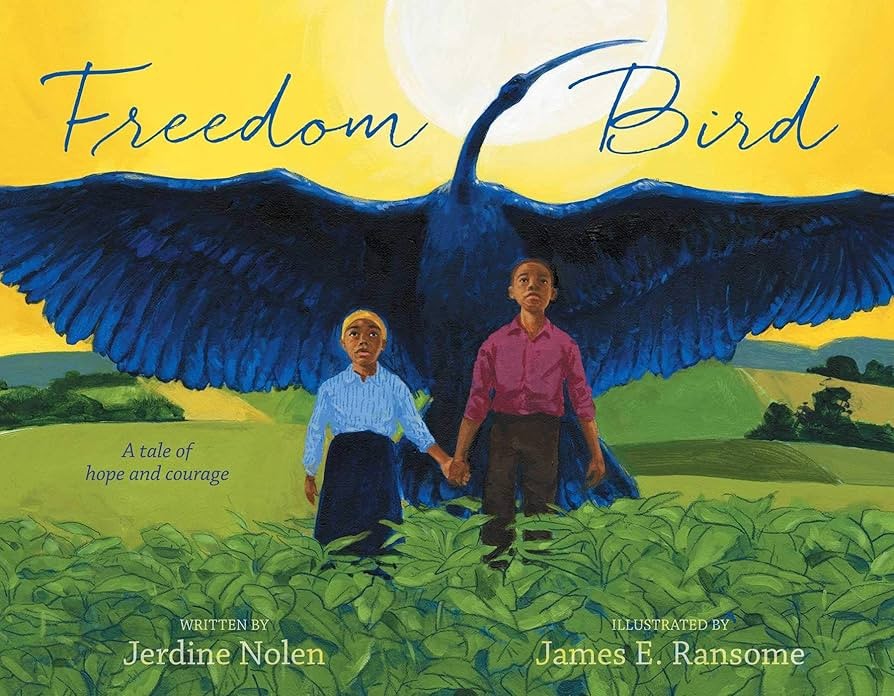
As writers, we will be exploring the text, Freedom Bird by Jerdine Nolen, which is a story of hope and freedom. We will be reseraching the life of Harriett Tubman who was instrumental in guiding African slaves to freedom. Children will write a biography about Harriet Tubman and the Underground Railroad.
Later in the Spring term, the class will be reading and writing about the legend Beowulf by Michael Morpurgo. As writers we will produce our own version of a legend.
Design & Technology:
Children will explore stronger and weaker shapes to form the structures of different bridges. They will design and make their own truss bridge using triangular structures.
Art:
The children will continue our drawing journey this term by using their observational skills to draw. In Art Talk we will study examples of pointillism. The children will develop visual literacy skills by observing and reflecting on a range of artwork in this style. This term the children will focus on drawing, looking in greater detail at the ‘shape’ element of art. The children will explore regular and organic shapes, 2D and 3D representations as well as op art using drawing to represent 3D illusions. We will study how artists have used shape in their work, such as Kandinsky.
Music:
This next unit explores different rhythm patterns from around the world. Through body percussion, pupils play contrasting styles of rhythms and transfer these onto untuned percussion. They play one rhythm against another, building up layers of sound while maintaining a secure sense of pulse.
History:
Shang Dynasty - As historians, we will be exploring and researching the Ancient Chinese civilization using key questions to lead the learning. We will compare and contrast rulers of ancient China - good, the bad and the ugly. The children will research an amazing woman who overcame all predudice to become one of China's greatest warriors.
Geography:
What is a river? As geographers, we will be investigating the features and processes of rivers. The class will explore the changes a river has over it's course from source to mouth. We will consider the changes to the River Thames since the Tudor era. Using food chains, we will discuss the importance of each organism in maintaining a balanced wildlife on a local river estuary. We will doing some fieldwork along the River Coquet to help us with our learning.